What is cedar bevel siding?
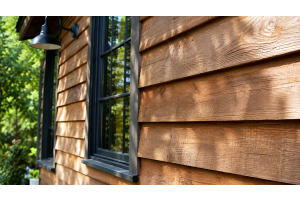
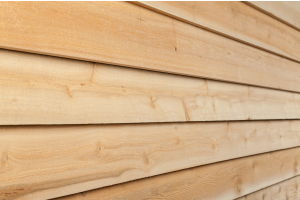
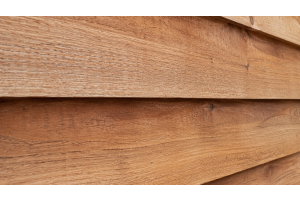
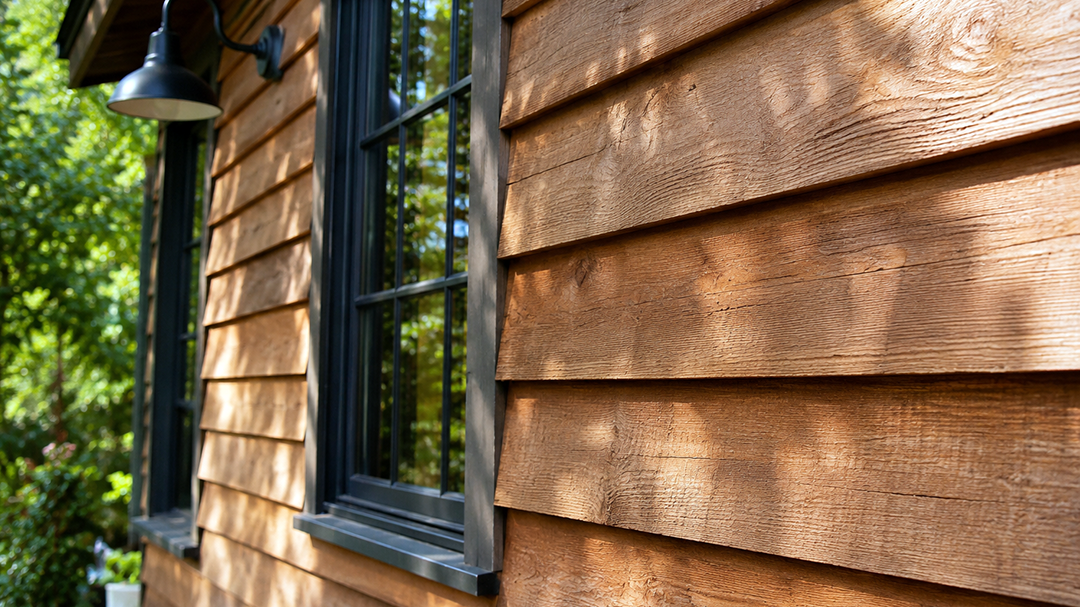
Cedar bevel siding is a traditional exterior cladding made from tapered cedar boards installed horizontally, with each board overlapping the one below it. It creates a distinctive shadow line and helps shed rainwater. Bevel siding is one of several cedar siding options, alongside tongue-and-groove, channel, shiplap and rabbeted bevel profiles and the board-and-batten and board-on-board installation styles, each offering a different appearance and installation method.
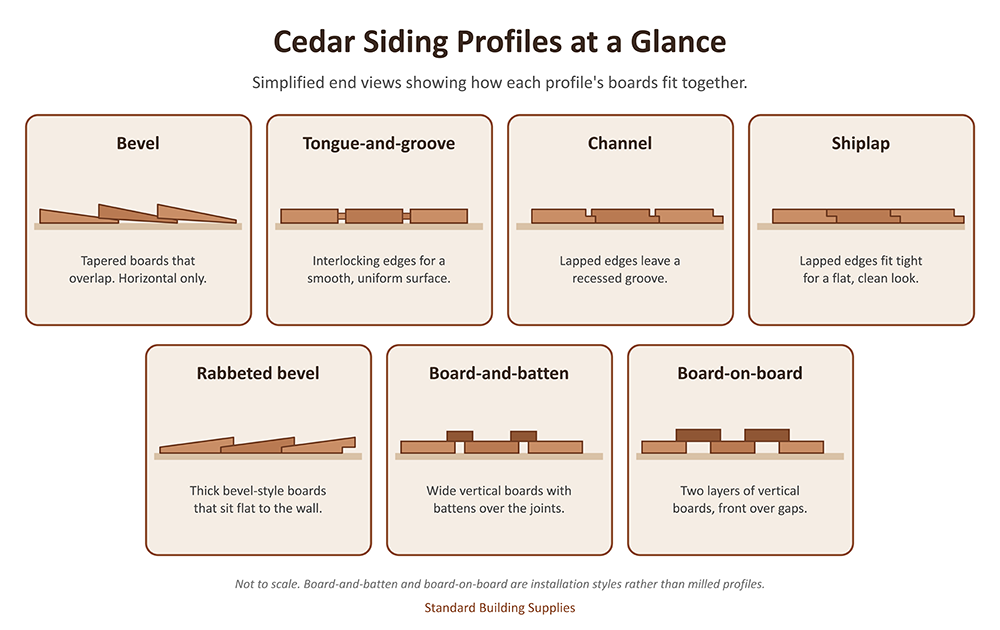
Cedar Siding Profiles at a Glance
- Bevel siding: Tapered, overlapping boards designed for horizontal installation.
- Tongue-and-groove: Interlocking boards that create a relatively uniform surface and can be installed in different orientations.
- Channel siding: Overlapping boards with pronounced grooves and shadow lines, suitable for various installation patterns.
- Board-and-batten: Vertical boards with narrow battens covering the joints.
- Shiplap: Rabbeted boards that overlap for a flat, tight-fitting surface.
- Rabbeted bevel: Thick, bevel-style boards with a rabbeted edge that sit flat against the wall.
- Board-on-board: Two layers of vertical boards, with the front boards covering the gaps.
- Design flexibility: The right profile depends on the desired appearance, orientation and installation requirements.
Cedar Siding Profile Comparison
| Profile | Appearance | Common Applications |
|---|---|---|
| Bevel | Overlapping horizontal boards | Traditional homes, renovations |
| Tongue-and-groove | Close-fitting boards with narrow joints | Contemporary homes, accent walls |
| Channel | Pronounced grooves and shadow lines | Modern and rustic exteriors |
| Board-and-batten | Vertical boards with raised battens | Farmhouse-style homes, cabins, architectural accents |
| Shiplap | Flat surface with tight, fine joints | Modern farmhouse and coastal homes, feature walls |
| Rabbeted bevel | Deep horizontal shadow lines, sits flat to the wall | Traditional and heritage-style homes |
| Board-on-board | Layered vertical boards | Rustic homes, cabins, accent features |
How Cedar Bevel Siding Is Made and Installed
Bevel siding is manufactured with one edge thicker than the other, creating a tapered board. This profile produces the familiar horizontal lines associated with traditional wood siding.
Western red cedar is a popular material for bevel siding because it contains natural tannins and oils that help it resist decay, and because it is relatively lightweight and dimensionally stable.
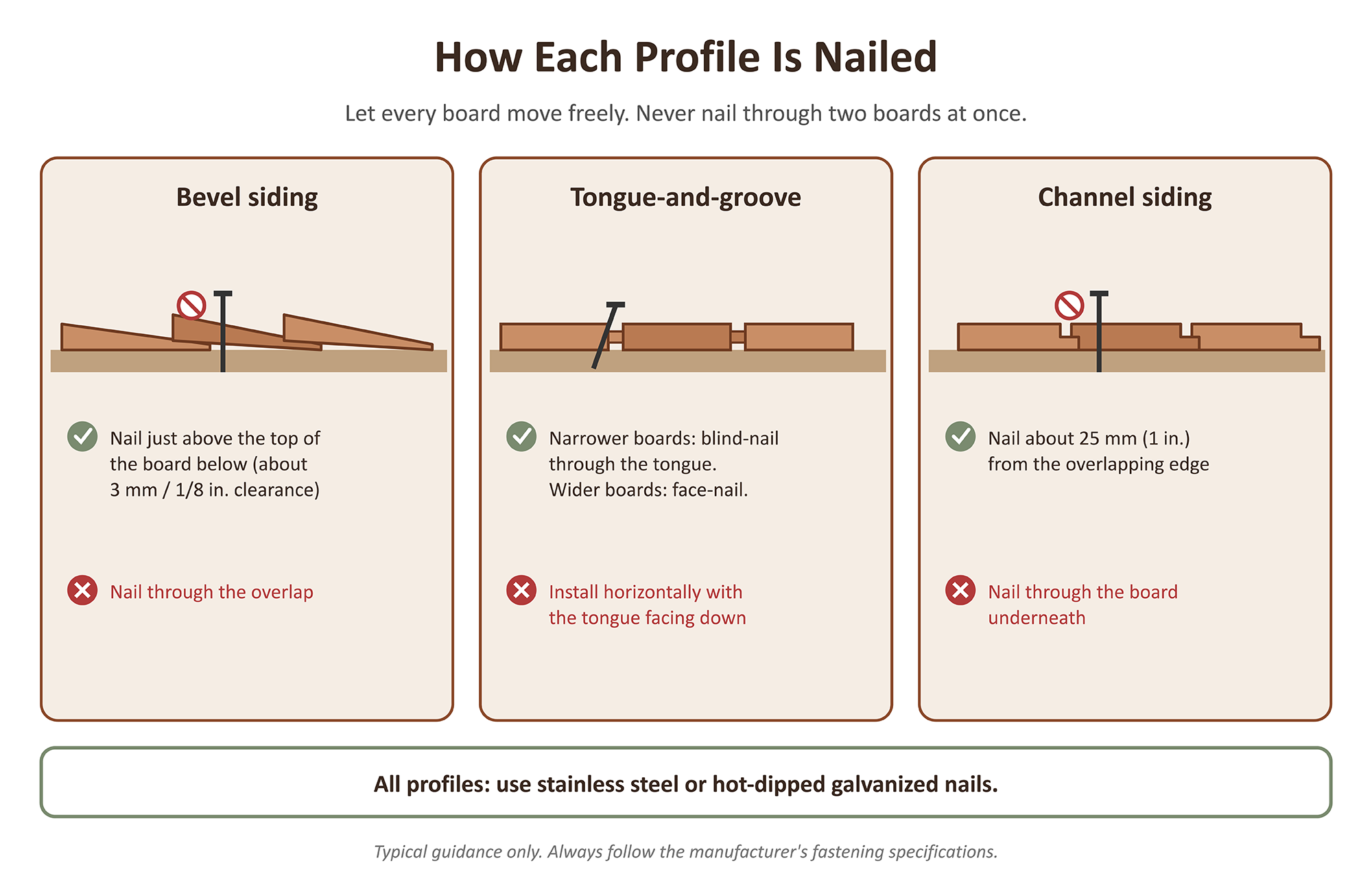
For proper installation, bevel siding is generally fastened with one nail per stud or strapping member. Place each nail so it just clears the top edge of the board below (about 3 mm, or 1/8 inch). Nailing through both overlapping boards can restrict natural wood movement and cause splitting. Stagger end joints between courses and seal cut ends. Use stainless steel or hot-dipped galvanized nails, as plain steel fasteners can react with cedar's natural tannins and leave dark stains. Always follow the manufacturer's fastening specifications.
Other profiles are fastened differently. Narrower tongue-and-groove boards are usually blind-nailed at an angle through the tongue, while wider boards are face-nailed. Channel and shiplap siding are typically nailed once per stud or strap about 25 mm (1 inch) from the overlapping edge, so the nail does not pass through the board underneath.
What Are the Different Cedar Siding Profiles Used For?
Different profiles can change the appearance of a building without changing the underlying siding material.
- Bevel siding is commonly used for full-home exteriors and renovations where a traditional horizontal appearance is desired.
- Tongue-and-groove siding is often selected for contemporary designs, feature walls and applications requiring a more continuous surface.
- Channel siding creates pronounced shadow lines and works well with rustic or modern architectural styles.
- Board-and-batten siding uses vertical boards with battens covering the joints, making it popular for cabins, farmhouse-inspired homes and accent features.
- Shiplap siding has rabbeted edges that overlap to create a flat, tight-fitting surface with a fine shadow line, suiting modern farmhouse and coastal styles.
- Rabbeted bevel siding is a thicker, bevel-style board with a rabbet along its thick edge, so it sits flat against the wall and creates a bold, deep shadow line.
- Board-on-board siding uses two layers of vertical boards, with the front boards overlapping the gaps between the back boards for a layered, rustic look.
Tongue-and-groove, channel and shiplap profiles may be installed horizontally, vertically or diagonally, depending on the product and installation specifications. This provides greater design flexibility than traditional bevel or rabbeted bevel siding. Vertical and diagonal installations need horizontal strapping or blocking to nail into. In a rainscreen wall, that usually means double strapping or vented strapping so water can still drain behind the siding.
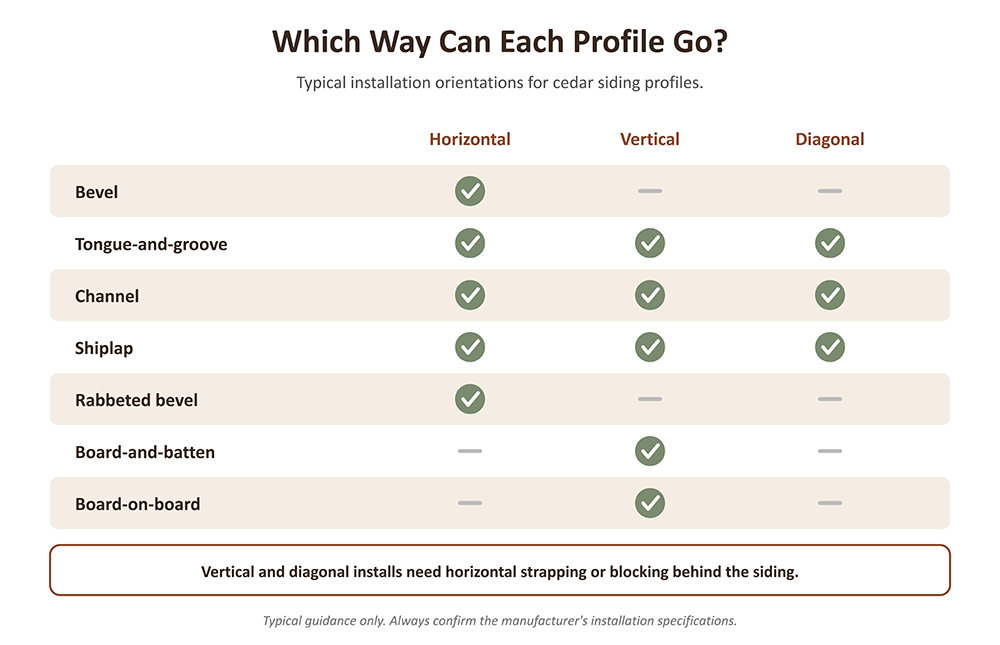
Board-and-batten and board-on-board are installation styles rather than single milled siding profiles. For a detailed comparison, see our guide to bevel siding vs. board-and-batten.
Cedar Bevel Siding vs. Tongue-and-Groove Siding
The main difference is how the boards fit together.
Bevel siding uses overlapping tapered boards and is designed for horizontal installation. Tongue-and-groove siding uses interlocking edges and offers greater flexibility in installation orientation.
Bevel creates more pronounced horizontal shadow lines, while tongue-and-groove generally produces a flatter, more uniform appearance.
Both require appropriate fastening, drainage and moisture management. When tongue-and-groove is installed horizontally, the tongue should face up so water cannot collect in the groove.
Cedar Bevel Siding vs. Channel Siding
The main difference is the joint. Bevel siding relies on the taper and overlap of each board, while channel siding has rabbeted edges that lap over one another and leave a recessed channel between boards.
Channel siding sits flatter against the wall and gives a crisp, modern line, and it can be installed vertically or diagonally. Bevel siding is designed for horizontal installation and creates a more traditional, angled shadow line.
Which Cedar Siding Profile Should You Choose?
Bevel siding is a good choice for traditional homes or renovations where overlapping horizontal boards suit the existing architecture.
Tongue-and-groove may be better suited to contemporary designs or projects requiring vertical or diagonal installation, while channel siding offers deeper shadow lines and shiplap gives a flat, clean surface. Rabbeted bevel suits heritage-style homes that want bold horizontal lines, and board-and-batten or board-on-board provide a distinctly vertical appearance.
Beyond aesthetics, consider board dimensions, effective coverage, installation requirements and material costs. Profiles with different overlap or joint details can require different quantities of lumber to cover the same wall area. Common cedar bevel siding sizes include 1/2 x 6 inch, 5/8 x 8 inch and 3/4 x 10 inch boards, and many profiles are available with a smooth or rough-sawn face.
Whichever profile you choose, regular care makes a big difference. Our guide on how long cedar siding lasts explains the maintenance and finishing steps that help it perform well for years.
Frequently Asked Questions
Is cedar bevel siding installed horizontally or vertically?
Cedar bevel siding is designed for horizontal installation, with the thicker edge facing downward and overlapping the board below.
What is the difference between bevel and channel siding?
Bevel siding uses tapered, overlapping boards. Channel siding uses boards with overlapping edges that create a recessed groove and a more pronounced shadow line. Channel siding may also offer more flexibility in installation orientation.
Can tongue-and-groove cedar siding be installed vertically?
Yes. Many tongue-and-groove cedar siding products can be installed vertically or diagonally as well as horizontally. Always confirm the manufacturer's requirements for the selected profile and wall assembly.
Does cedar siding need a rainscreen in B.C.?
In much of coastal B.C., the BC Building Code requires a rainscreen: a drained and vented air gap behind the siding that lets water drain and the wall dry. Requirements vary by location and building type, so confirm them with your local building department and the product's installation specifications.
Which cedar siding profile is most economical?
Cost depends on grade, dimensions, profile, availability and installation labour. Overlapping and interlocking profiles cover less wall than their nominal width suggests. For example, a 6-inch bevel board typically leaves only about 4½ to 5 inches exposed once installed. Compare effective coverage and installed cost rather than board price alone.
Which side of cedar siding should face out, smooth or rough?
Many cedar siding products can be installed with either face exposed. The rough-sawn face absorbs stain well and generally holds it longer, while the smooth face suits paint and a more refined look. Check the product's recommendations before installation.
What is the difference between channel and shiplap siding?
Both use rabbeted edges that overlap. Shiplap boards fit tightly for a flat, nearly seamless surface, while channel siding leaves a wider recessed groove between boards for a more pronounced shadow line.
What is rabbeted bevel siding?
Rabbeted bevel is a thicker, bevel-style cedar siding with a rabbet along its thick edge. The rabbet lets each board sit flat against the wall over the board below, creating a deep shadow line with a traditional look. Standard Building Supplies stocks kiln-dried, select tight knot (STK) cedar rabbeted bevel siding in two sizes: 1 x 8 inch and 5/8 x 4 inch.
Explore Cedar Siding at Standard Building Supplies
From classic bevel siding to tongue-and-groove, channel and shiplap profiles, Standard Building Supplies carries western red cedar siding in a range of grades, profiles and sizes to suit homes across B.C.
As a member of the Western Red Cedar Lumber Association (WRCLA), we supply quality-graded cedar siding for new construction and renovation projects.
Planning a new cedar siding project? Our team can help you compare profiles and find the right fit for your home.