What is the difference between bevel and board-and-batten siding?
Bevel siding uses overlapping, tapered boards installed horizontally, while board-and-batten siding typically uses wide vertical boards with narrow strips covering the joints. Both can be made from western red cedar, but they create distinctly different exterior appearances. The better choice depends on the building's design, installation requirements, material costs and desired finish.
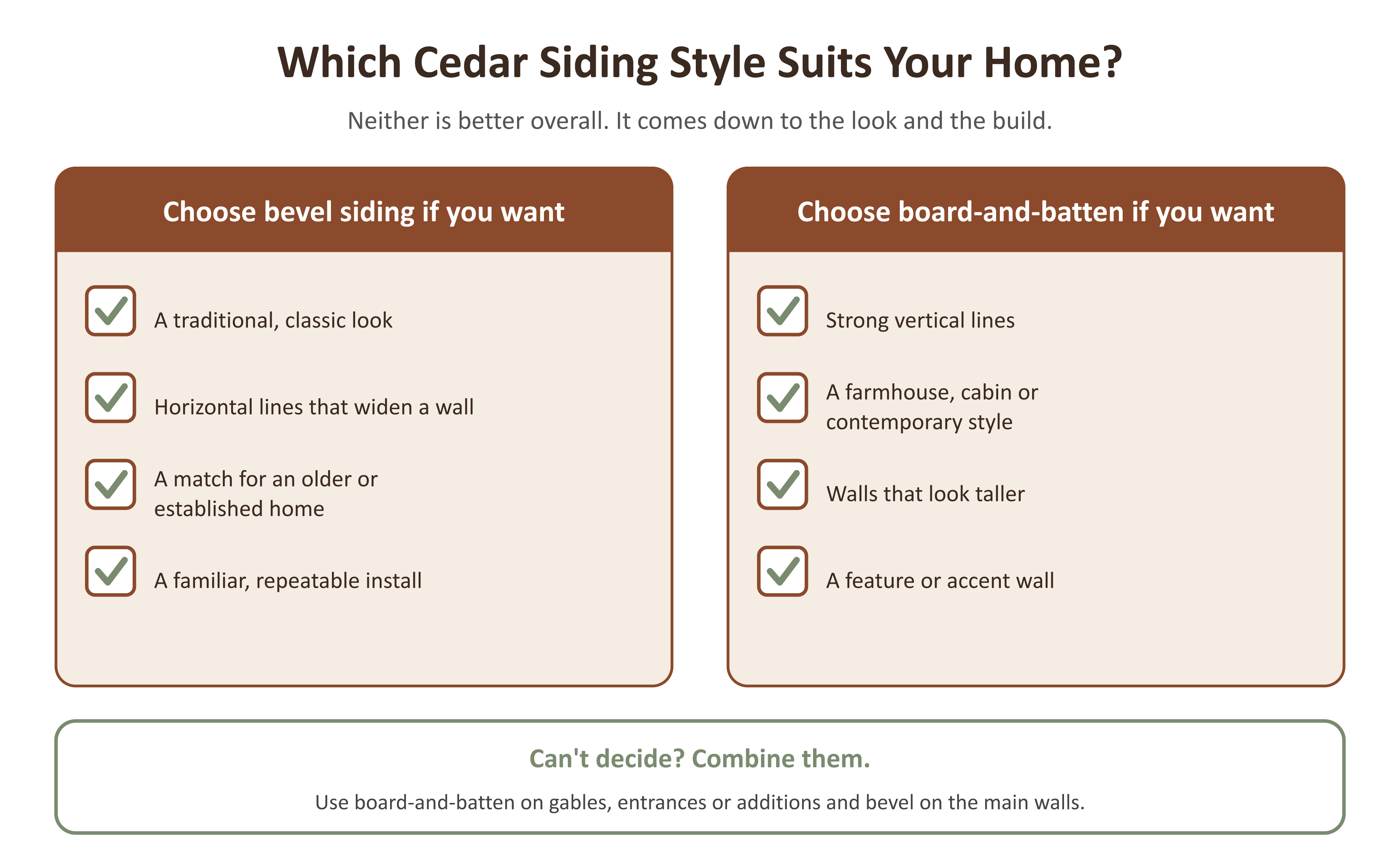
Neither style is better overall. Bevel siding suits traditional homes and horizontal designs, while board-and-batten suits farmhouse, cabin and contemporary designs or vertical accent walls. Both perform well in western red cedar when they are installed with proper drainage, fastening and finishing.
Bevel vs. Board-and-Batten at a Glance
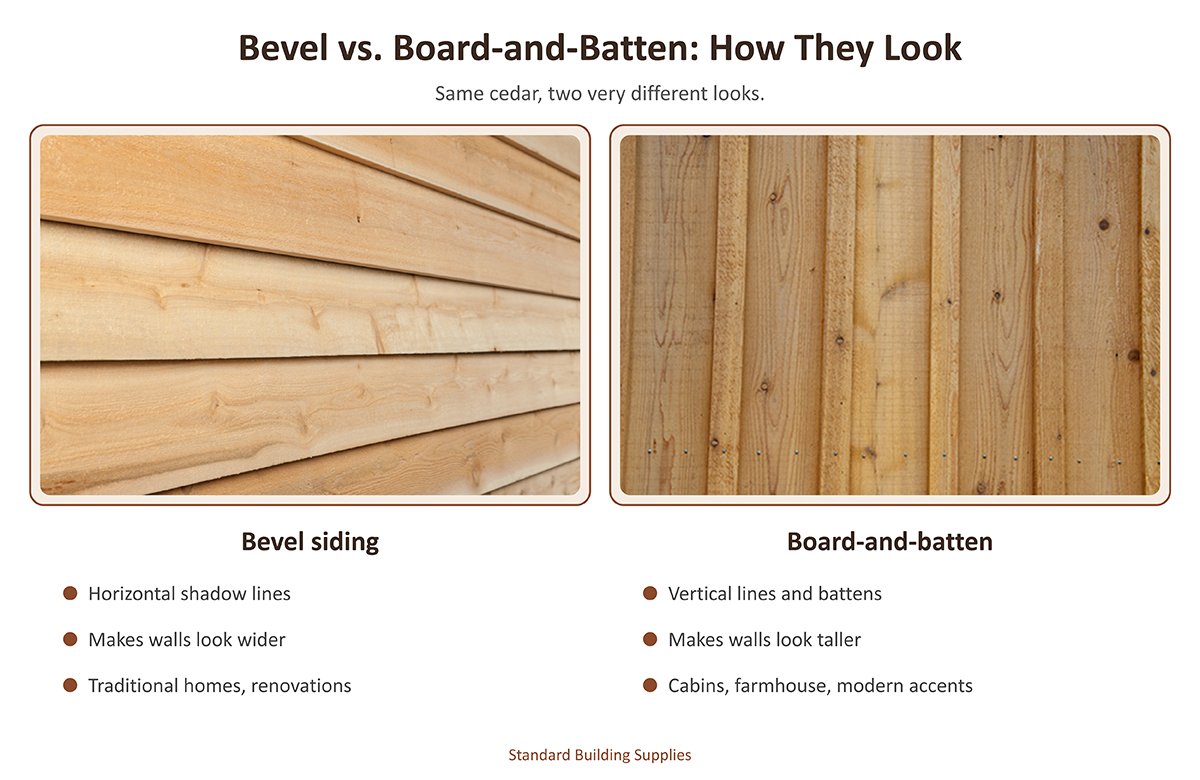
- Bevel siding: Traditional horizontal lines created by overlapping tapered boards.
- Board-and-batten: Vertical lines created by wider boards and narrow battens.
- Appearance: Bevel emphasizes width, while board-and-batten emphasizes height.
- Materials: Both styles can use western red cedar.
- Installation: Each requires appropriate detailing, fastening and moisture management.
Bevel Siding vs. Board-and-Batten Comparison
| Feature | Bevel Siding | Board-and-Batten |
|---|---|---|
| Orientation | Horizontal | Vertical |
| Board Style | Tapered, overlapping boards | Wide boards with narrow battens |
| Appearance | Traditional horizontal shadow lines | Pronounced vertical lines |
| Common Uses | Traditional homes, renovations | Cabins, farmhouse-style homes, modern accents |
| Installation | Overlapping courses | Battens cover joints between boards |
| Material Estimating | Based on board exposure and overlap | Based on board widths, spacing and battens |
What Is Bevel Siding?
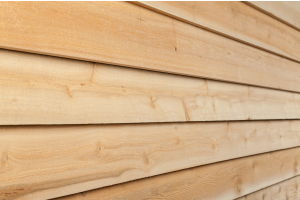
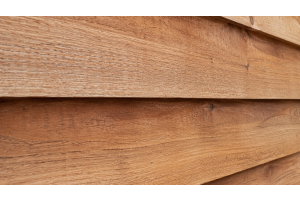
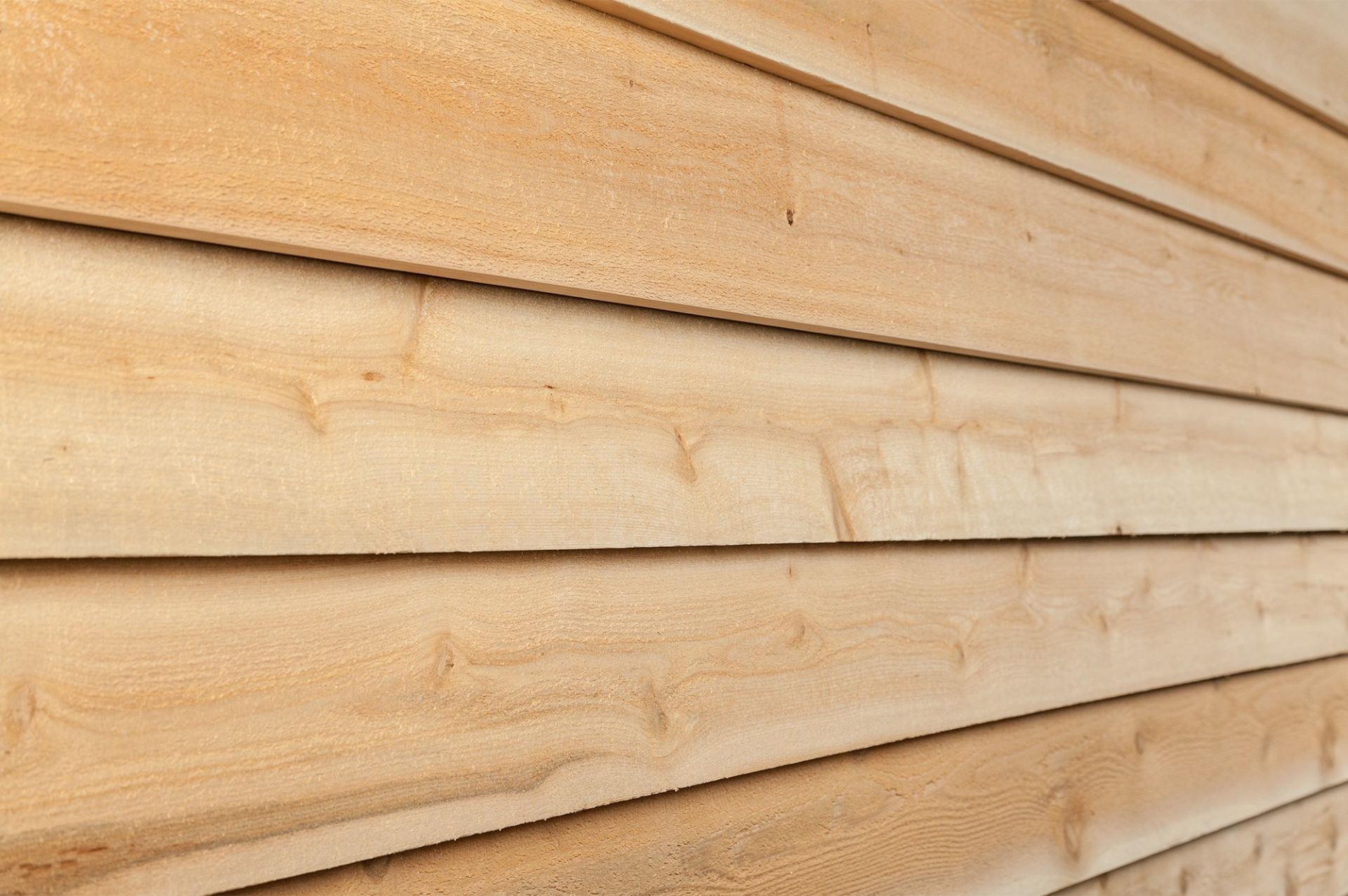
Bevel siding is made from tapered wood boards installed horizontally so each course overlaps the one below.
The overlapping design helps shed rainwater and creates a traditional appearance commonly associated with wood-sided homes.
Western red cedar is frequently used because it contains natural tannins and oils that help it resist decay, and because it is lightweight, stable and has an attractive grain.
What Is Board-and-Batten Siding?
Board-and-batten is a siding style that uses wide boards installed vertically, with narrower strips called battens covering the joints.
It is commonly used on cabins, farmhouse-inspired homes, contemporary buildings and architectural accent walls.
The vertical pattern can make walls appear taller and creates a different visual effect from horizontal bevel siding.
Bevel Siding vs. Board-and-Batten: Installation and Cost
The two styles require different installation methods.
Bevel siding is installed in overlapping horizontal courses, with one nail per stud or strapping member. Place each nail so it just clears the top edge of the board below (about 3 mm, or 1/8 inch). Nailing through both overlapping boards can restrict natural wood movement and cause splitting. Stagger end joints between courses, locate them over framing or strapping, and seal cut ends before installation. Follow the manufacturer's fastening specifications.
Board-and-batten uses vertical boards with narrow battens covering the joints. A common method is to space the boards about 12 mm (1/2 inch) apart and nail each one once down the centre. Each batten then overlaps the boards on either side by at least 12 mm and is nailed through the gap between them, so it does not pin the boards underneath. This lets each board expand and contract freely. Follow the manufacturer's specifications for board spacing, fastening and support.
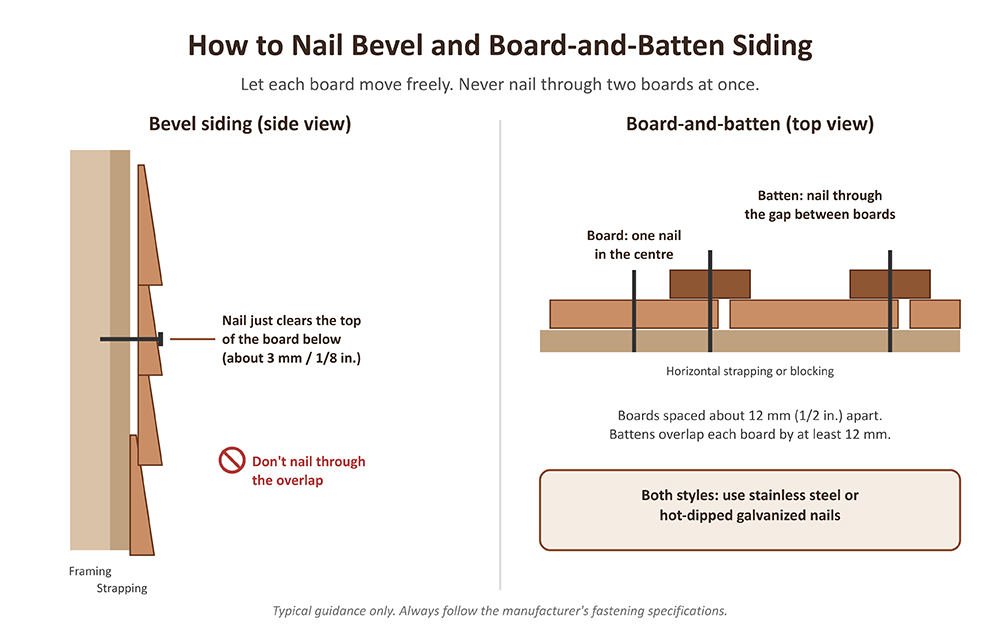
In much of coastal B.C., the BC Building Code requires siding to be installed over a rainscreen: a drained and vented air gap that lets the wall dry. This matters even more for vertical siding, which needs horizontal support to nail into. Because horizontal strapping on its own can block drainage, vertical siding in a rainscreen wall usually goes over double strapping (vertical strips with horizontal strips on top) or vented strapping.
For both styles, use stainless steel or hot-dipped galvanized nails. Plain steel fasteners can react with cedar's natural tannins and leave dark stains on the siding.
Costs depend on cedar grade, board dimensions, material quantities, fasteners and labour. Board-and-batten estimates must account for both the main boards and battens, while bevel siding estimates must account for the overlap between courses. For example, a 6-inch bevel board typically leaves about 4½ to 5 inches exposed once installed, so you need more material than the wall area alone suggests.
Neither style is automatically less expensive. The total installed cost depends on the specific materials and building design.
Which Siding Should You Choose?
Choose bevel siding if you want a traditional horizontal appearance that suits established residential architecture.
Choose board-and-batten if you prefer stronger vertical lines, a farmhouse-inspired design or a contemporary exterior accent.
Both can provide the natural appearance and durability of western red cedar when properly installed and maintained.
Wondering how much upkeep cedar needs? Find out how long cedar siding lasts and how to protect it with the right cleaning, finishing and inspection routine.
Frequently Asked Questions
Is board-and-batten more expensive than bevel siding?
Not necessarily. Material grade, board dimensions, coverage, installation complexity and labour all affect cost. Compare complete installed estimates rather than individual board prices.
Can board-and-batten siding be made from cedar?
Yes. Western red cedar is commonly used for board-and-batten siding because of its appearance, workability and the natural tannins and oils that help it resist decay.
Which siding style is better for rainy climates?
Both can perform well when installed with appropriate drainage, ventilation, flashing and fastening. The wall assembly and installation quality matter more than the visual style alone.
Is bevel siding always installed horizontally?
Bevel siding is designed primarily for horizontal installation. Follow the product manufacturer's installation requirements.
Can you combine bevel and board-and-batten siding?
Yes. Combining horizontal and vertical siding can help distinguish architectural features, such as gables, entrances and additions.
Which is easier to install, bevel or board-and-batten?
Board-and-batten often goes up faster because the boards are wider, but it needs horizontal strapping or blocking behind it and careful board spacing. Bevel siding takes more courses but follows a familiar, repeatable pattern. For either style, installation quality matters more than speed.
Does board-and-batten siding need strapping?
Usually, yes. Vertical boards need horizontal support to nail into. In a rainscreen wall, that is typically double strapping or vented strapping so water can still drain behind the siding.
Can bevel siding be installed rough side out?
Yes. Many cedar bevel siding products can be installed with either the smooth or rough-sawn face exposed. The rough face absorbs stain well and generally holds it longer, while the smooth face suits paint and a more refined look.
Find Cedar Siding at Standard Building Supplies
From classic bevel siding to bold board-and-batten exteriors, Standard Building Supplies carries a wide selection of western red cedar siding in a range of grades, profiles and sizes to suit homes across B.C.
As a member of the Western Red Cedar Lumber Association (WRCLA), we stock quality-graded cedar siding for both bevel and board-and-batten applications.
Planning a new cedar siding project or a feature wall? Our team can help you compare styles and find the right fit for your home.